
Russia-Ukraine Conflict Summary 2022 pdf: The Russia-Ukraine Conflict in Perspective

Since then, the war has not only claimed thousands of lives and uprooted millions of people, but it has also had an impact on the political climate and economy of nations all over the world, from South Asia to Britain.
There are several political, historical, and territorial aspects to the conflict between Russia and Ukraine. Although it is difficult to give a comprehensive explanation, I can give you a quick rundown of the main causes of the conflict:
1.Background information: Although Ukraine has had periods of foreign rule and independence, there are centuries-old historical ties between Russia and Ukraine. In 1991, Ukraine won its freedom from the Soviet Union.
2 .Geopolitical Considerations: Due to Ukraine's geopolitical importance, which includes its strategic location and proximity to the Black Sea, both Russia and Western nations are interested in the region. Russia is displeased with Ukraine's efforts to strengthen links with the EU and NATO because it sees them as a threat to its regional power.
3 .Annexation of Crimea: In 2014, as a result of political unrest and the resignation of Viktor Yanukovych as president of Ukraine, Russia annexed Crimea. The world community strongly denounced this action because it was against both international law and the territorial integrity of Ukraine.
4 .Conflict in Eastern Ukraine: Pro-Russian separatist movements appeared in eastern Ukraine after the invasion of Crimea. In the Donetsk and Luhansk areas, the conflict intensified into a full-fledged military war between Ukrainian government forces and separatist organisations supported by Russia.
5 .Divisions along Ethnic and language Lines: Ukraine is a multiethnic nation with a variety of language and ethnic groups. Divisions between those who lean towards Russian cultural and linguistic ties and those who identify more with a Ukrainian national identity have contributed to the conflict.
The relationship between Russia and Ukraine has experienced a number of upheavals and escalations, but their shared history stretches back to at least the late 1700s, when the region that is now known as Ukraine joined the Russian empire after periods of domination by the Mongols, the Poles, and the Lithuanians. However, one year after Russia's communist revolution, Ukraine proclaimed its independence. However, the Red Army eventually seized the majority of it in 1921, transforming Ukraine into a republic inside the Soviet Union.
A famine known as the Holodomor resulted from the severe and oppressive USSR policies that punished farmers in the republic for disobeying collectivist directives. In the 1930s, the Holodomor, a man-made catastrophe that is thought to have killed 7 million people there, heightened Ukrainians' feeling of national identity. In 1991, with the fall and dissolution of the Soviet Union, Ukraine reclaimed its freedom.
Since 1991, when the Soviet Union broke up into 15 sovereign nations, there have been periods of ties, tensions, and open antagonism between the successor republics of the former USSR. Beginning in the 1990s, Ukraine's foreign policy was driven by a desire to safeguard its independence and sovereignty as well as a desire for fair collaboration with the European Union (EU) and other major powers, such as Russia. Following the fall of the USSR, the EU, the US, and Russia all had distinct goals and perspectives for Eastern Europe's future. Russia desired a sphere of influence, the EU wanted a hegemonic and united Europe, and America wanted to play a significant role in preserving the Euro-Atlantic community in addition to showing Russia who was boss.
The post-cold war Ukraine crisis erupted in the winter of 2013–14 after Viktor Yanukovych, the country's president at the time, refused to ratify the association agreement with the European Union. This failure sparked Euromaidan, a wave of pro–EU protests across Ukraine. Russia sought to undermine the pro-EU leadership to support its narrative that Ukraine naturally swings towards Russia in order to limit Ukraine's aspirations for European integration. Yanukovich, however, was compelled to resign as president as a result of a series of circumstances.
Despite Russia and the EU's efforts, the protests escalated and the situation in the region deteriorated. In the end, Yanukovych left the country, and the demonstrators played a significant part in the formation of a new, pro-EU temporary government in Kyiv. Arseniy Yatsenyuk was chosen to lead a caretaker administration until fresh elections could be held, and the new administration received international recognition, particularly from Russia's bitter foe, the US.It was a significant setback for Russia, which maintained that the new caretaker government was unconstitutional and that all the events were orchestrated to carry out a coup d'état. This justification would eventually be used by Russia to defend its military incursions into Ukrainian territory in an effort to "protect Russians and Russian speakers" who were seen as being in imminent danger.
A series of sizable pro-Russian protests also erupted after Yanukovych fled, and Vladimir Putin saw this as an opportunity to move towards "returning Crimea to Russia."On February 27, 2014, unmarked Russian forces seized key locations in Crimea, including the parliament building and the airport. They also installed a pro-Russian government led by Sergey Aksyonov. This event marked the beginning of the annexation of Crimea by the Russian Federation". On March 18, 2014, Crimea was legally absorbed into Russia. In 2014, paramilitaries supported by Russia also took control of a portion of eastern Ukraine's Donbas region. Donetsk and Luhansk make up the area. The Minsk agreements led to some degree of regional autonomy.
Despite widespread perceptions to the contrary, some political analysts believe that Russia's invasion of Ukraine in 2022 was a response to NATO's provocations and Ukraine's unrelenting attempts to cobble together the EU.
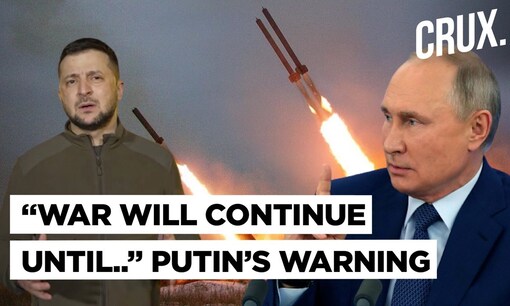
- Investigating Russia's Actions in Ukraine, one finds an enduring truth: Russia's actions in Ukraine are seen as the culmination of numerous humiliations inflicted upon Russia's rulers and the nation as a whole by the West, largely at American urging, over the past 30 years," stated Michael Brenner.
- On February 21, a declaration by Putin proclaimed Luhansk and Donetsk as independent from Ukraine, citing alleged threats from the country's neonazi forces towards these cities. Subsequently, Russian forces entered both regions. According to Putin, military intervention was necessary to halt Ukrainian attacks on the two breakaway areas.
- The invasion of Ukraine by Russia commenced on February 24, spanning from Belarus to the north, the Crimean Peninsula in the south, and its own territory to the east. Putin characterized it as a distinctive military operation aimed at "denazifying" and "demilitarising" Ukraine.
- Despite facing a torrent of U.S. and EU sanctions, the full-scale invasion of Ukraine by Putin continued unabated. The ongoing war has resulted in the loss of thousands of lives and displaced millions of people, while also exerting significant influence on the global political climate and economies of nations, ranging from South Asia to Britain.
Author: allykazmi
5 Comments
War is good. Plz stop
ReplyDeleteThis war is creating big crises
ReplyDeleteWhat about usa and eu role in this war.
ReplyDeleteGood information hope conflict will finished soon
ReplyDeleteHope war will stop soon
ReplyDelete