
Monsoon rains are a critical natural phenomenon in South Asia, brought about by the seasonal wind system. These rains are a result of temperature variations between the land and water.
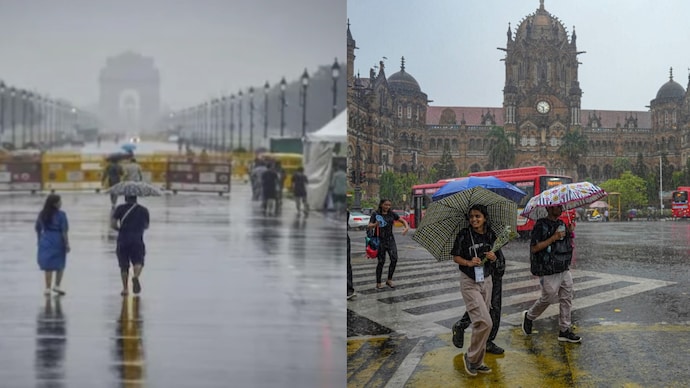 |
| Monsoon arrived in Delhi and Mumbai together for first time in 62 years |
Recently, a significant event took place as the monsoon arrived in both Delhi and Mumbai simultaneously after a gap of 62 years. These two cities, separated by a distance of more than 1,430 kilometers, experienced the onset of monsoon on the same day, a rare occurrence. The last time such synchrony was observed was on June 21, 1961.
During this occurrence, the Safdarjung observatory in Delhi, which represents the city's weather, recorded 116.6mm of rain between 8.30 am and 5.30 pm on that memorable day. Following closely was Lodhi Road, with 107.6mm of rainfall. The majority of this rainfall occurred between 8.30 am and 2.30 pm, as stated by the Meteorological Department.
The monsoon's arrival in the capital city brought relief from a scorching heatwave that had persisted for 116 days, as the temperatures dropped by approximately 12°C. However, the heavy rain led to flooded roads, causing disruptions in traffic during rush hour.
The monsoon season in India typically spans from June to September, and Delhi receives the bulk of its annual rainfall during this period. On average, the monsoon brings around 71 centimeters (28 inches) of rainfall to Delhi. The heaviest monsoon rainfall on record in Delhi occurred in 1978, with a staggering 1,546 millimeters (61 inches) of rain.
The monsoon plays a crucial role in supporting agriculture in India by providing water for irrigation and crop growth. Moreover, it helps mitigate the risk of drought in the region. However, it can also pose challenges, as it may result in flooding, landslides, and other damages.
Recent years have seen increasing unpredictability in the monsoon patterns, which is attributed to climate change. Climate change has intensified and made the monsoon more erratic and powerful, raising concerns among farmers and individuals whose livelihoods rely on monsoon-dependent activities.

Monsoon Cycle Of India
Some additional facts about the Indian monsoon include its names, such as the "Indian summer monsoon" or the "southwest monsoon." These winds blow from the southwest, carrying moisture from the Arabian Sea and the Bay of Bengal. The monsoon accounts for about 70% of India's total annual rainfall and plays a vital role in supporting agriculture, drinking water supply, and hydroelectric power generation. However, it also presents risks, such as flooding, particularly in low-lying areas.
The monsoon's significance in India's climate and economy underscores the need for continued monitoring and understanding of this crucial weather phenomenon in the face of evolving climate patterns.
Author:allykazmi
ok


1 Comments
Good for delhi people
ReplyDelete